
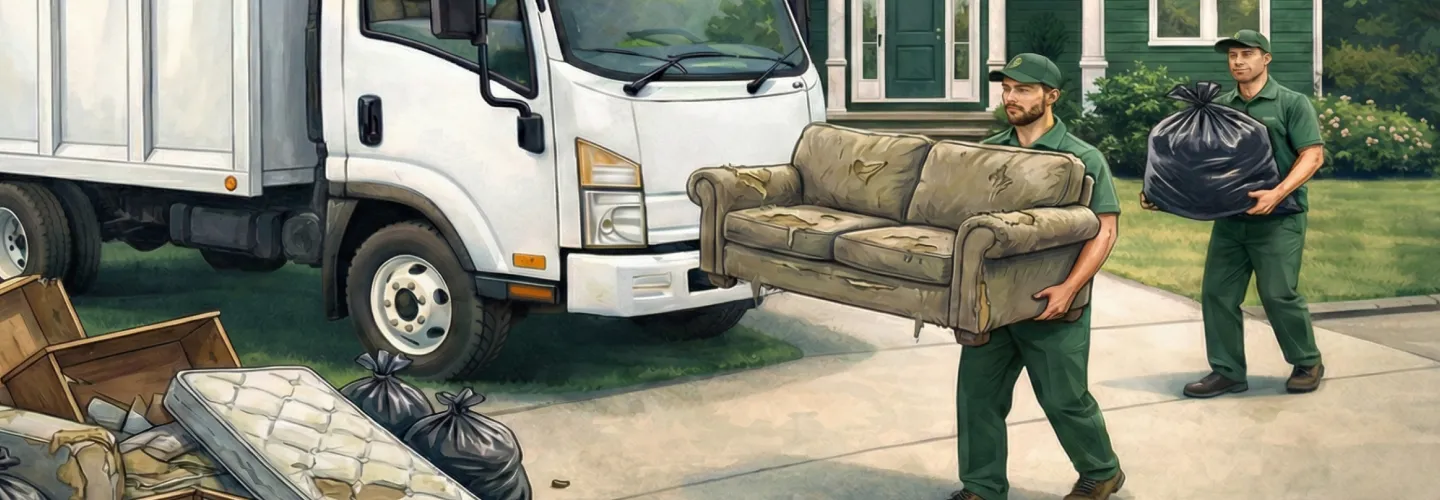
McDonough Regular Trash Pickup Services
Choose our Regular Trash Pickup for dependable, hassle-free service that keeps your home clean and your schedule worry-free—enjoy peace of mind knowing your waste is handled by local professionals who care.
Get a Free QuoteOur McDonough Junk Removal Services
Regular Trash Pickup in McDonough, GA – Local Service Guide
Regular trash pickup in McDonough, GA is essential for maintaining clean neighborhoods like Lake Dow North and Wesley Lakes. Residents often schedule pickups during spring cleanouts, after storms, or when replacing large items such as mattresses or appliances. Local disposal options include donation, recycling, or city-approved disposal, with logistics influenced by weather, driveway access, and item size. For residential spaces, seasonal yard waste and garage cleanouts are common, especially in areas with heavy tree coverage or near Walnut Creek. Flood-prone properties may require more frequent pickups. Commercial clients in downtown McDonough, retail centers, and medical offices need tailored schedules for high-volume waste, discreet service, and compliance with local regulations. Specialty pickups—such as for construction debris or estate cleanouts—require advance planning and coordination, especially for larger properties or during community events. For details on local rules and resources, visit the McDonough Public Works Department.
Key Considerations for Regular Trash Pickup in McDonough
- Timing pickups around local events, storms, and seasonal cleanouts
- Securing permits for large or specialty items
- Using approved disposal and recycling channels
- Ensuring clear access for collection vehicles, especially in narrow or wooded areas
- Managing volume and frequency based on property type and location
- Coordinating with city schedules and category-specific requirements
Benefits of Regular Trash Pickup in McDonough
Consistent Waste Removal
Improved Neighborhood Cleanliness
Flexible Pickup Schedules
Reliable Local Service
Environmentally Friendly Disposal
Hassle-Free Trash Management
Coordinating Regular Trash Pickup Schedules with McDonough's Public Works Department
Regular trash pickup in McDonough is managed through the city's contracted waste hauling services, overseen by the McDonough Public Works Department. Residents must adhere to designated collection days and preparation requirements to ensure timely curbside service. Key guidelines for weekly trash collection include:
- Cart placement: Roll carts must be placed at the curb by 6:00 AM on the scheduled collection day with handles facing the residence and lids fully closed
- Cart positioning: Carts should be at least three feet from mailboxes, parked vehicles, utility poles, and other obstructions
- Prohibited overflow: Trash must not extend above the cart lid; loose bags placed beside the cart may not be collected
- Collection window: Carts should be retrieved from the curb within 12 hours of collection to comply with municipal property maintenance standards
Residents who miss a scheduled pickup or experience service disruptions should contact the city's designated waste hauler directly. The McDonough Code Compliance Division enforces ordinances related to improper cart storage, overflowing containers, and debris left at the curb outside of collection windows.
McDonough Public Works Department
2 Griffin Street, McDonough, GA 30253
Phone: (770) 957-5786
Official Website: McDonough Public Works Department
McDonough's Prohibited Waste Materials and Proper Disposal Alternatives
Not all household waste qualifies for regular curbside trash pickup in McDonough. Georgia's solid waste regulations, administered by the Georgia Environmental Protection Division, restrict certain materials from entering municipal waste streams. Residents must separate the following items from regular trash:
- Hazardous household waste: Paints, solvents, pesticides, motor oil, and automotive fluids require disposal through Henry County's periodic household hazardous waste collection events
- Electronics: Televisions, computer monitors, and other electronic devices should be taken to designated e-waste recycling drop-off locations rather than placed in curbside carts
- Appliances with refrigerants: Refrigerators, air conditioners, and freezers require certified refrigerant recovery under EPA Section 608 regulations before disposal
- Tires and batteries: Lead-acid batteries and tires are prohibited from landfill disposal in Georgia and must be recycled through authorized facilities
- Yard waste: Grass clippings, leaves, and brush must be separated from household trash and placed in designated yard waste containers or bags
Improper disposal of prohibited materials may result in code enforcement action and fines issued by the city.
Georgia Solid Waste Management Act Compliance for McDonough Residents
McDonough's trash collection services operate within the regulatory framework established by the Georgia Comprehensive Solid Waste Management Act (O.C.G.A. § 12-8-20). This state law mandates that all municipalities maintain solid waste management plans addressing collection, disposal, and waste reduction. Key compliance requirements affecting McDonough residents include:
- Waste reduction goals: Georgia's statewide goal encourages a 25 percent reduction in per capita solid waste disposal through recycling, composting, and source reduction
- Illegal dumping penalties: Disposing of household waste on vacant lots, roadsides, or unauthorized locations violates both state law and McDonough municipal code, carrying fines and potential criminal charges
- Hauler licensing: All commercial waste haulers operating within McDonough must maintain proper licensing and insurance as required by the McDonough Community & Economic Development department
- Landfill compliance: Waste collected in McDonough is transported to permitted Subtitle D landfills that meet Georgia EPD liner, monitoring, and closure requirements
Residents should verify that any private hauler they engage holds valid state and local operating permits.
Georgia Environmental Protection Division
2 Martin Luther King Jr. Drive SE, Suite 1456, Atlanta, GA 30334
Phone: (404) 656-4713
Official Website: Georgia Environmental Protection Division
McDonough Code Compliance Standards for Curbside Waste and Property Maintenance
The McDonough Code Compliance Division enforces municipal ordinances governing the storage, placement, and removal of household waste. Violations related to regular trash pickup can result in notices of violation, fines, and mandatory corrective action. Residents should be aware of the following standards:
- Cart storage: Trash carts must be stored behind the front building line or screened from public view when not placed for collection
- Bulk items: Large items such as furniture, appliances, and mattresses may not be left at the curb outside of scheduled bulk collection periods; contact the waste hauler to arrange special pickup
- Accumulation of waste: Allowing trash, debris, or refuse to accumulate on residential property constitutes a code violation subject to enforcement action
- Construction debris: Renovation and demolition waste is not accepted in regular curbside carts and requires separate disposal arrangements; the McDonough Building Inspection Division may require permits for projects generating significant debris
Code compliance officers conduct routine inspections and respond to complaints. Repeated violations may result in escalating penalties and municipal liens on the property.
McDonough Code Compliance Division
2 Griffin Street, McDonough, GA 30253
Phone: (770) 957-5786
Official Website: McDonough Code Compliance Division
Recycling Participation and Waste Diversion Efforts in McDonough
Recycling is an essential component of responsible waste management in McDonough, supporting Georgia's statewide waste reduction objectives. Residents receiving regular trash pickup service are encouraged to maximize use of curbside recycling programs to divert recoverable materials from landfills. Commonly accepted curbside recyclables include:
- Paper and cardboard: Newspapers, magazines, office paper, corrugated cardboard (flattened), and paperboard boxes
- Plastics: Bottles and containers marked with resin codes #1 and #2; lids removed and containers rinsed
- Metals: Aluminum cans, steel food cans, and empty aerosol cans
- Glass: Clear, green, and brown glass bottles and jars (labels may remain)
Materials that contaminate recycling loads—such as plastic bags, food-soiled paper, Styrofoam, and garden hoses—must be excluded from recycling carts. Contaminated loads may be rejected and sent to the landfill, undermining diversion efforts. The EPA Region 4 Southeast office provides additional guidance on federal recycling standards and waste minimization strategies applicable to Georgia communities.
What Neighborhoods Do We Serve Throughout McDonough, GA?
- Downtown McDonough Historic Square: Older commercial and residential structures surround the historic courthouse square, where narrow streets and on-street parking may affect collection vehicle access. Properties in this area may be subject to historic preservation guidelines administered by the McDonough Planning & Zoning Division.
- Avalon: This established single-family subdivision features standard curbside cart placement along residential streets. Homeowners association rules may impose additional requirements for cart storage and visibility between collection days.
- Cobblestone Manor: A newer residential community with wide streets and accessible cul-de-sacs that accommodate collection vehicles. Residents should confirm designated pickup days with the contracted hauler upon move-in.
- Ola Crossroads Area: Properties near the Ola Road corridor include a mix of single-family homes on larger lots. Longer driveways may require residents to transport carts to the roadside for collection access.
- Westbridge: This subdivision includes both single-family and townhome sections with varying cart placement requirements. Townhome residents should verify whether individual or shared collection points apply to their units.
- Reeves Station: A growing residential area where new construction may generate temporary increases in debris. Construction waste must be managed separately from regular curbside trash service per city building permit conditions.