
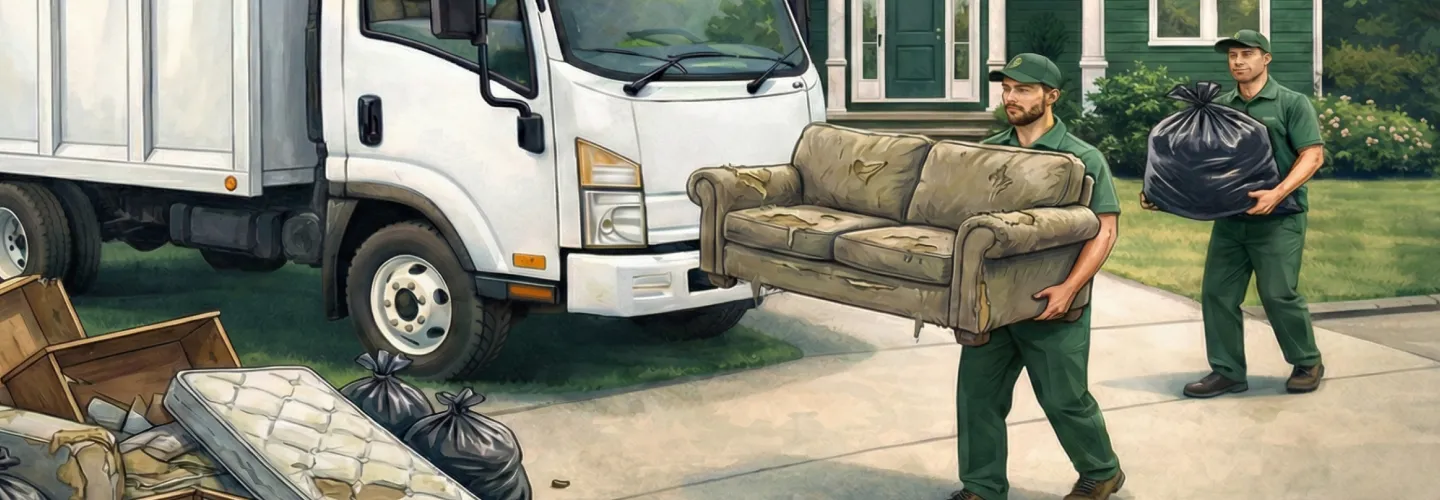
McDonough Medical Facilities Junk Removal Services
Choose our Medical Facilities Junk Removal for expert handling of sensitive materials, strict adherence to health regulations, and a commitment to keeping your facility clean, safe, and compliant—so you can focus on patient care.
Get a Free QuoteOur McDonough Junk Removal Services
Medical Facilities Junk Removal in McDonough, GA – Local Service Guide
Medical facilities in McDonough, GA, require specialized junk removal services to ensure compliance, safety, and minimal disruption to daily operations. Whether you’re clearing out outdated equipment from a clinic near Henry Medical Center, renovating a dental office in the Avalon Park area, or managing waste from a healthcare facility on Jonesboro Road, local expertise is essential. Junk removal for medical sites often involves strict handling of sensitive materials, adherence to privacy regulations, and coordination with facility management to avoid interfering with patient care. Disposal options may include recycling eligible equipment, donating usable items, or arranging for compliant disposal of regulated waste. Access logistics, such as limited parking or after-hours removal, are common considerations in busy medical complexes. For guidance on local disposal rules and facility requirements, consult the McDonough Public Works Department.
Key Considerations for Medical Facilities Junk Removal in McDonough
- Timing removals to avoid peak patient hours and maintain privacy
- Securing necessary permits for regulated waste disposal
- Using approved disposal channels for medical and electronic items
- Navigating facility access, including elevators and restricted zones
- Estimating volume for efficient scheduling and cost control
- Coordinating with facility managers for compliance and minimal disruption
Benefits of Medical Facilities Junk Removal in McDonough
Specialized Medical Waste Handling
HIPAA-Compliant Disposal
Fast and Reliable Service
Eco-Friendly Junk Removal
Minimized Disruption to Operations
Licensed and Insured Professionals
Coordinating Medical Facility Waste Removal with McDonough's Code Compliance and Public Works Departments
Medical facilities in McDonough generate specialized waste streams that require careful coordination with municipal authorities before removal. Unlike standard commercial junk, medical facility cleanouts may involve regulated materials such as expired pharmaceuticals, broken diagnostic equipment containing hazardous components, and furniture contaminated by biological agents. McDonough's Code Compliance Division enforces property maintenance standards and zoning compliance that directly affect how medical waste and surplus items are staged, transported, and disposed of from healthcare properties.
- Regulated medical waste (sharps, pathological waste, chemotherapy agents) must be handled by licensed medical waste transporters under Georgia law — not standard junk removal services
- Non-regulated medical items (waiting room furniture, office equipment, cabinetry) may be removed through conventional hauling but require proper sorting on-site
- Building permits may be required if removal involves structural modifications such as dismantling built-in cabinetry or lab fixtures
- Staging areas for removed items must not obstruct fire lanes, ADA-accessible routes, or public rights-of-way
Contact McDonough's Code Compliance Division before scheduling large-scale medical facility cleanouts to confirm property-specific requirements and avoid violations.
McDonough Code Compliance Division
2 Griffin Street, McDonough, GA 30253
Phone: (770) 957-5786
Official Website: McDonough Code Compliance Division
Georgia Environmental Protection Division Requirements for Medical Facility Disposal Compliance
Georgia regulates medical facility waste through the Georgia Comprehensive Solid Waste Management Act (O.C.G.A. § 12-8-20 et seq.), which establishes classifications for solid waste, special waste, and hazardous waste generated by healthcare operations. Medical facilities in McDonough must distinguish between items that qualify as standard solid waste and those requiring specialized disposal pathways before any junk removal project begins.
- Non-hazardous solid waste — waiting room chairs, desks, filing cabinets, and general office supplies — may be disposed of through permitted solid waste facilities in Henry County
- Universal waste — fluorescent lighting tubes, mercury-containing thermostats, and batteries common in medical settings — must follow EPA universal waste regulations and cannot be placed in standard waste streams
- Electronic medical equipment — monitors, computers, diagnostic devices — may contain circuit boards with lead solder and mercury switches requiring e-waste recycling
- Pharmaceutical waste — expired or unused medications must be managed under Resource Conservation and Recovery Act (RCRA) guidelines; flushing or landfill disposal is prohibited for most categories
The Georgia Environmental Protection Division oversees enforcement and permitting for facilities generating these waste types. Medical facility managers should obtain a waste characterization assessment before initiating any large-scale cleanout.
Georgia Environmental Protection Division
2 Martin Luther King Jr. Drive SE, Suite 1456 East, Atlanta, GA 30334
Phone: (404) 656-4713
Official Website: Georgia Environmental Protection Division
OSHA and Safety Protocols for Medical Equipment Removal in McDonough Healthcare Settings
Removing junk from medical facilities in McDonough presents unique occupational safety hazards that differ substantially from residential or standard commercial cleanouts. Workers may encounter sharps containers, chemical residues on surfaces, heavy imaging equipment, and biologically contaminated furnishings. The Occupational Safety and Health Administration (OSHA) mandates specific protections for personnel handling materials in healthcare environments.
- Bloodborne Pathogen Standard (29 CFR 1910.1030) — workers must use personal protective equipment including gloves, face shields, and gowns when handling items potentially contaminated with blood or bodily fluids
- Hazard Communication Standard — chemical labels on medical-grade cleaning agents, sterilization compounds, and laboratory reagents must be reviewed before items are moved or discarded
- Heavy lifting protocols — medical imaging tables, autoclaves, and examination chairs often exceed 300 pounds and require mechanical lifting equipment or team-lift procedures
- Sharps injury prevention — loose needles, scalpel blades, and broken glass vials may be embedded in furniture cushions, drawers, or floor debris during facility cleanouts
- Respiratory protection — mold, chemical fumes, or particulate matter from older medical facility renovations may necessitate N95 or higher-rated respirators
McDonough's Fire Department can provide guidance on fire code compliance during large-scale equipment staging and removal operations.
McDonough Fire Department
60 Atlanta Street, McDonough, GA 30253
Phone: (770) 957-1561
Official Website: McDonough Fire Department
Recycling and Diversion Options for Medical Office Electronics and Furnishings in McDonough
Medical facility cleanouts in McDonough often yield significant volumes of reusable or recyclable materials that should be diverted from landfills whenever possible. Georgia does not currently enforce a statewide e-waste landfill ban, but responsible disposal practices and federal regulations still govern how medical electronics and furnishings should be handled. Henry County operates solid waste and recycling services that accept certain categories of materials from commercial generators.
- Electronic medical devices — patient monitors, desktop computers, printers, and networking equipment should be processed through certified e-waste recyclers who provide data destruction certificates and R2 or e-Stewards certification
- Data security — all electronic devices from medical facilities must have protected health information (PHI) destroyed in compliance with HIPAA before recycling or disposal; hard drive shredding or degaussing documentation is required
- Metal recovery — stainless steel examination tables, instrument trays, IV poles, and surgical lighting fixtures have significant scrap metal value and should be separated for recycling
- Office furniture donation — waiting room seating, desks, and shelving in good condition may be donated to organizations such as Habitat for Humanity ReStore locations in the greater Atlanta metro area
- Appliance refrigerant recovery — medical refrigerators and freezers used for specimen or pharmaceutical storage require EPA Section 608-compliant refrigerant recovery by a certified technician before disposal
McDonough's Public Works Department can direct medical facility operators to approved disposal and recycling resources within the municipal service area.
McDonough Public Works Department
2 Griffin Street, McDonough, GA 30253
Phone: (770) 957-5786
Official Website: McDonough Public Works Department
Building Permits and Zoning Compliance for Medical Facility Renovation Debris in McDonough
When medical facility junk removal accompanies renovation, tenant improvement, or facility closure in McDonough, building permits and zoning compliance become critical considerations. The McDonough Building Inspection Division reviews construction and demolition activities to ensure structural safety, environmental compliance, and adherence to local building codes. Medical facilities undergoing interior demolition — such as removing built-in cabinetry, plumbing fixtures, or partition walls — typically require permits before work begins.
- Demolition permits are required when removal involves structural elements, load-bearing walls, or mechanical systems within medical office spaces
- Asbestos surveys — facilities constructed before 1980 may contain asbestos in floor tiles, pipe insulation, ceiling tiles, and joint compounds; Georgia requires a thorough inspection by a licensed asbestos inspector before demolition or renovation per Georgia Rules for Asbestos (391-3-19)
- Lead paint assessment — medical buildings constructed before 1978 may contain lead-based paint; the EPA Renovation, Repair, and Painting Rule requires certified renovators when disturbing painted surfaces
- Zoning verification — confirm that staging removed materials on-site or in parking areas complies with McDonough's zoning ordinances through the Planning and Zoning Division
- Wastewater considerations — removal of sinks, sterilization equipment, or laboratory plumbing must not result in unauthorized discharges into the municipal wastewater system
McDonough Building Inspection Division
2 Griffin Street, McDonough, GA 30253
Phone: (770) 957-5786
Official Website: McDonough Building Inspection Division
What Neighborhoods Do We Serve Throughout McDonough, GA?
- Downtown McDonough Historic Square: Medical and dental offices in older commercial buildings near the historic square may present narrow hallway access and lack freight elevators. Removal crews should coordinate with the McDonough Planning and Zoning Division regarding any historic district restrictions on exterior staging or signage removal.
- South Point / Highway 155 Corridor: This commercial corridor hosts numerous medical offices, urgent care clinics, and specialty practices in modern strip-center and standalone buildings. Wide parking lots and ground-level access generally facilitate efficient equipment removal and loading.
- Lake Dow Road Area: Mixed-use developments along Lake Dow Road include medical office suites within multi-tenant buildings. Coordination with property management for shared loading zones and after-hours access is typically required for large-scale cleanouts.
- Avalon / Eagles Landing Parkway: This rapidly developed area features newer medical complexes, outpatient surgical centers, and diagnostic imaging facilities. Buildings typically offer service entrances and adequate truck staging areas, though HOA-governed commercial parks may require advance approval for removal operations.
- Westridge / Jonesboro Road Corridor: Older medical practices along Jonesboro Road may occupy converted residential structures with limited interior clearance and residential-width driveways. Pre-removal site assessments are recommended to determine equipment access routes and identify potential asbestos or lead paint concerns in pre-1980 structures.
- McDonough West / Industrial Boulevard Area: Medical supply warehouses and administrative offices in this light-industrial zone typically offer loading dock access and wider vehicle clearance. Commercial waste hauler requirements and business licensing through McDonough Community & Economic Development should be verified before initiating removal projects.