
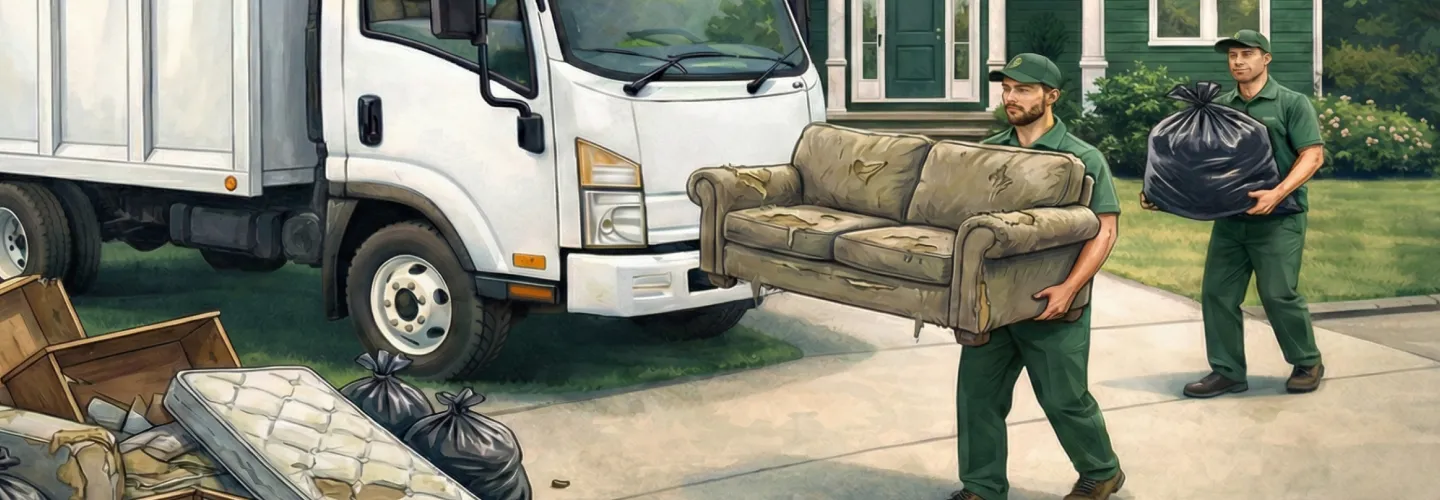
McDonough Garage Clean Out Services
Choose our Garage Clean Out service for a hassle-free, thorough, and efficient transformation—enjoy a spotless, organized garage without lifting a finger.
Get a Free QuoteOur McDonough Junk Removal Services
Garage Clean Out in McDonough, GA – Local Service Guide
Garage clean outs in McDonough, GA are often prompted by seasonal changes, home upgrades, or life events like moving or estate transitions. In neighborhoods such as Lake Dow North and Wesley Lakes, residents frequently schedule clean outs during spring or after major storms to clear out accumulated clutter, old furniture, or appliances. Local disposal options include donation centers, recycling facilities, and city-approved waste services. Access and logistics can vary—tight driveways or rainy weather may require special planning, especially for large or heavy items. For commercial properties near the McDonough Square or along Jonesboro Road, clean outs are often timed to minimize business disruption and may involve higher volumes or specialty items. Specialty services, such as for estate or foreclosure clean outs, require careful coordination and adherence to local property guidelines. For more on local disposal rules and resources, visit the McDonough Public Works Department.
Key Considerations for Garage Clean Out in McDonough
- Optimal timing: spring, post-storm, or before property sales
- Check for required permits for large-scale disposals
- Use approved disposal and recycling channels
- Plan for access in neighborhoods with limited driveway space
- Estimate volume and coordinate for specialty items
- Follow local guidelines for hazardous or bulky waste
Benefits of Garage Clean Out in McDonough
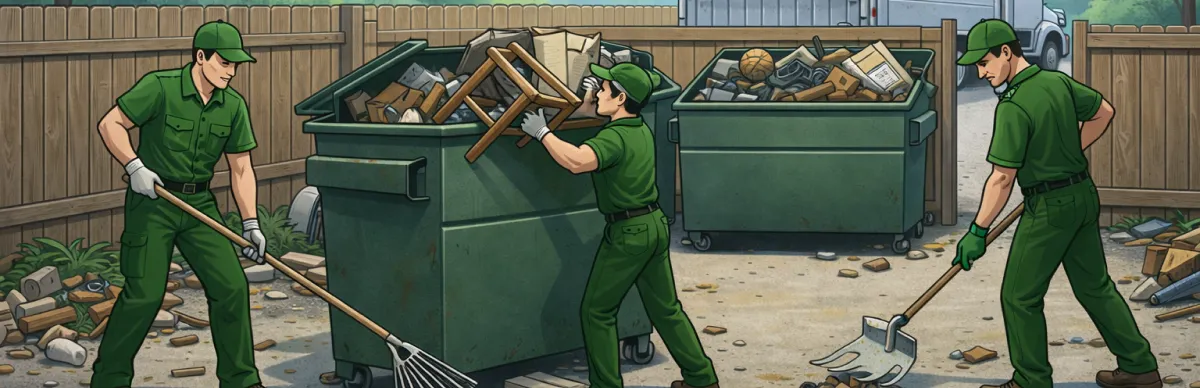
Fast and Efficient Service
Experienced Clean Out Professionals
Eco-Friendly Disposal Solutions
Flexible Scheduling Options
Transparent Upfront Pricing
Comprehensive Garage Organization
Coordinating Garage Clean Out Debris with McDonough's Public Works and Solid Waste Services
Garage clean outs in McDonough often generate a mix of household items, old furniture, stored chemicals, and miscellaneous debris that must be disposed of in accordance with municipal waste handling requirements. The City of McDonough's Public Works Department oversees infrastructure services that include coordination of waste-related concerns for residential properties. Before beginning a garage clean out, residents should categorize materials into distinct disposal streams to ensure compliance with local and state regulations. Key preparation steps include:
- Separate hazardous materials such as old paint cans, pesticides, motor oil, and solvents from general household waste
- Identify recyclable items including scrap metal, cardboard, and electronics for proper diversion
- Set aside reusable goods such as sporting equipment, tools, and furniture for donation
- Confirm collection schedules with your contracted waste hauler, as the City of McDonough does not operate municipal curbside trash collection directly
- Review volume limitations imposed by your private hauler to avoid overage fees or refused pickups
Residents should note that McDonough relies on private franchise haulers for residential waste collection rather than a city-operated service. Contact the McDonough Public Works Department for guidance on approved haulers and disposal coordination.
McDonough Public Works Department
2 Griffin Street, McDonough, GA 30253
Phone: (770) 957-5786
Official Website: McDonough Public Works Department
McDonough Code Compliance Standards for Property Maintenance During Garage Clean Outs
The City of McDonough enforces property maintenance and code compliance standards that directly affect how garage clean out materials may be staged, stored, and removed from residential properties. The McDonough Code Compliance Division investigates violations related to accumulated debris, junk vehicles, and improperly stored waste on private property. Residents undertaking a garage clean out should be aware of the following requirements:
- Debris may not be left on driveways, yards, or sidewalks for extended periods; items staged for pickup should be removed promptly
- Junk vehicles or vehicle parts discovered during a garage clean out must be handled according to municipal abandoned vehicle ordinances
- Accumulated refuse visible from the street may trigger a code enforcement investigation and potential citation
- Hazardous materials such as leaking batteries, fuel containers, or chemical drums must not be placed curbside with regular waste
- Construction-related debris from garage renovations may require a separate building permit and approved disposal method
Failure to comply with property maintenance codes can result in violation notices and fines. Residents should schedule removal services in advance to avoid prolonged staging of debris on their property.
McDonough Code Compliance Division
2 Griffin Street, McDonough, GA 30253
Phone: (770) 957-5786
Official Website: McDonough Code Compliance Division
Georgia's Solid Waste Management Act and Garage Clean Out Disposal Requirements
Georgia state law governs the proper handling and disposal of solid waste generated during residential garage clean outs. The Georgia Comprehensive Solid Waste Management Act (O.C.G.A. § 12-8-20) establishes the regulatory framework for waste collection, transportation, and disposal throughout the state. The Georgia Environmental Protection Division (GA EPD) enforces these requirements at the state level. McDonough residents should understand the following state-level obligations:
- All solid waste must be transported to permitted facilities — illegal dumping on roadsides, vacant lots, or waterways carries penalties of up to $25,000 per day per violation under Georgia law
- Tires are subject to specific disposal regulations and may not be placed in standard landfills without proper processing; scrap tire carriers must hold a Georgia EPD permit
- Lead-acid batteries are banned from landfill disposal statewide and must be returned to retailers or recycling facilities
- Used motor oil and automotive fluids commonly found in garages must be taken to designated collection points, not disposed of in household trash
- Appliances containing refrigerants require certified recovery of Freon or other coolants per EPA Section 608 regulations before disposal
Henry County, where McDonough is located, operates under the South Metropolitan Solid Waste Authority's regional planning framework, which sets landfill diversion goals applicable to residential waste streams.
Hazardous Material Handling and E-Waste Recycling for McDonough Garage Clean Outs
Garages frequently store hazardous materials that require special handling during a clean out. Common items include paint, paint thinner, pesticides, herbicides, pool chemicals, propane tanks, fire extinguishers, and automotive fluids. These materials are classified as household hazardous waste (HHW) and are prohibited from regular curbside collection and standard landfill disposal. McDonough residents must use designated HHW collection events or facilities for proper disposal. Key guidelines include:
- Never mix chemicals or pour them down storm drains; McDonough's stormwater management system discharges to local waterways protected under the Clean Water Act
- Old electronics such as computers, televisions, and printers should be recycled through certified e-waste processors rather than placed in household trash
- Rechargeable batteries and lithium-ion batteries pose fire risks in waste trucks and landfills and should be taken to retail drop-off locations or Call2Recycle collection sites
- Fluorescent bulbs and CFL lamps contain mercury and require recycling at designated facilities
- Propane tanks and compressed gas cylinders must never be placed in curbside waste; contact your local fire department for guidance on safe disposal
The EPA Region 4 office, which covers Georgia, provides additional resources on household hazardous waste management and proper disposal protocols.
McDonough Fire Department
60 Keys Ferry Street, McDonough, GA 30253
Phone: (770) 957-1561
Official Website: McDonough Fire Department
Building Permits and Renovation Debris Disposal for McDonough Garage Projects
When a garage clean out involves structural modifications, demolition of built-in shelving, removal of old drywall, or replacement of garage doors and flooring, a building permit may be required from the City of McDonough. The McDonough Building Inspection Division reviews permit applications for residential renovation and demolition work. Residents should consider the following:
- Demolition or structural alteration of garage walls, electrical systems, or plumbing fixtures typically requires a permit and inspection
- Asbestos-containing materials may be present in older garages built before 1980, particularly in floor tiles, insulation, and roofing materials; a licensed asbestos inspector should assess suspect materials before disturbance, as required under the EPA Lead-Safe Renovation Rule and Georgia's asbestos regulations
- Construction and demolition (C&D) debris including concrete, lumber, drywall, and metal must be transported to facilities permitted to accept C&D waste
- Scrap metal such as old shelving, tools, and appliance components can often be diverted to metal recycling facilities, reducing landfill volume
- Concrete and masonry from garage floor or foundation work should be separated for recycling at inert waste facilities
McDonough Building Inspection Division
2 Griffin Street, McDonough, GA 30253
Phone: (770) 957-5786
Official Website: McDonough Building Inspection Division
What Neighborhoods Do We Serve Throughout McDonough, GA?
- Downtown McDonough Historic Square: Older homes and commercial buildings near the historic town square may have narrow driveways and limited staging areas for garage clean out debris. Properties in this area may be subject to historic preservation guidelines that affect exterior modifications and debris placement visibility from the street.
- Avalon: This established residential subdivision features single-family homes with standard two-car garages and accessible driveways. HOA regulations may govern how long debris can be staged curbside and require advance notification for removal vehicles.
- Cobblestone Manor: A newer planned community with wider streets that accommodate removal trucks. Residents should verify HOA covenants regarding temporary debris staging and confirm that removal vehicles do not obstruct shared community access points.
- Heron Bay: Homes in this subdivision often include larger garages with significant storage accumulation. Cul-de-sac layouts may require advance coordination for truck turning radius and loading access.
- Magnolia Park: A family-oriented neighborhood with moderate lot sizes and attached garages. Proximity to main roadways provides efficient access for removal services, though residents should confirm staging areas do not encroach on public rights-of-way.
- Westbridge: This community features a mix of home sizes with varying garage configurations. Residents should coordinate clean out timing with HOA-approved service hours and ensure debris does not block sidewalks or common areas during the removal process.